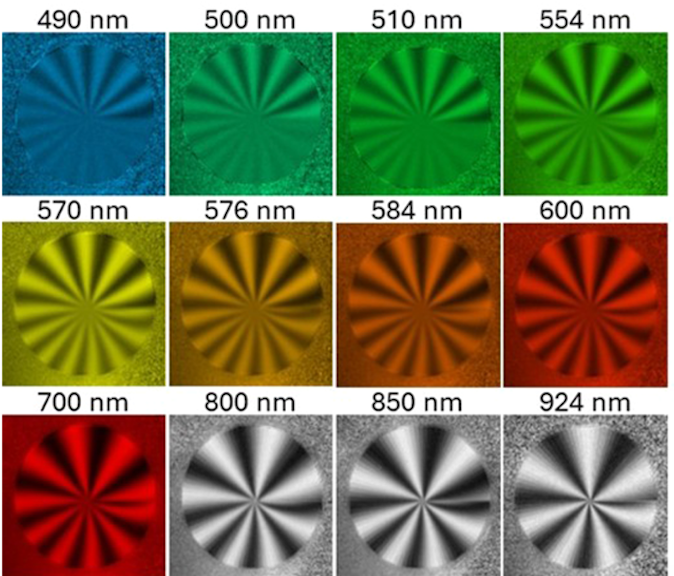
 Our last work is now published in Advanced Photonics Nexus, entitled Hyperspectral evaluation of an adaptive liquid-crystal spiral plate for tuning vortices in a broadband range – PDF
In this work we show a hyperspectral procedure for evaluating phase-only liquid-crystal (LC) modulators with spatially varying retardance. The procedure is illustrated with an adaptive spiral phase plate (ASPP) based on a custom electrode design that produces spiral phases with variable phase depth, thus enabling the generation of vortex beams with tunable topological charge.
By recording the spatially resolved spectrum of the device in a hyperspectral image, a comprehensive mapping of the optical retardance function to wavelength and applied voltage is obtained.
The work has been done in collaboration with out colleague Dr. Noureddine Bennis, from WAT – Military University of Technology, Warsaw, Poland, where the the liquid-crystal device was fabricated.
This is the first paper of the PhD Thesis of Sergio López-Rincón.
O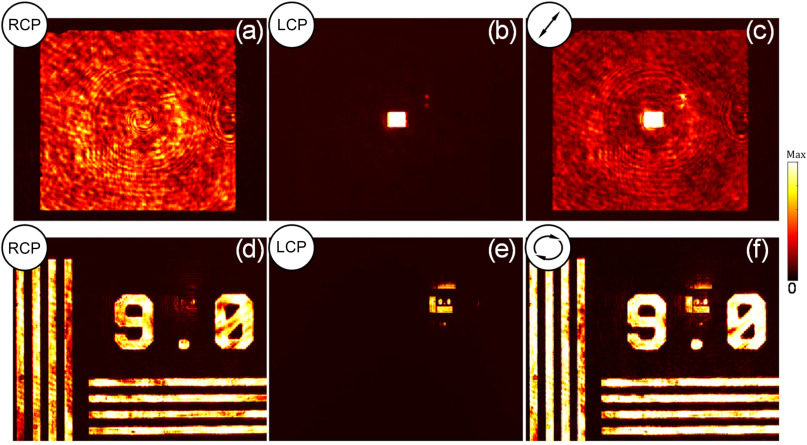 ur last paper is now published in Optics Communications, entitled Dual-polarization telescope system based on lens doublets with a geometric-phase lens. PDF
Here we propose a dual-polarization telescope system based on two lens doublets, each composed of a geometric-phase (GP) lens and a conventional refractive lens. The bifocal properties of this hybrid lens doublet are obtained using the ray matrix formalism. We then demonstrate the coupling of two such doublets to construct the dual polarization telescope, which yields two images with distinct magnifications for orthogonal circular polarizations. The conditions required for these two images to lie in a common plane are obtained. Experimental validation combining a liquid-crystal GP lenses and a standard refractive lenses.
This work is part of the PhD Thesis of Santiago Ríos Alvarez
miércoles, 30 de septiembre de 2026
i.moreno
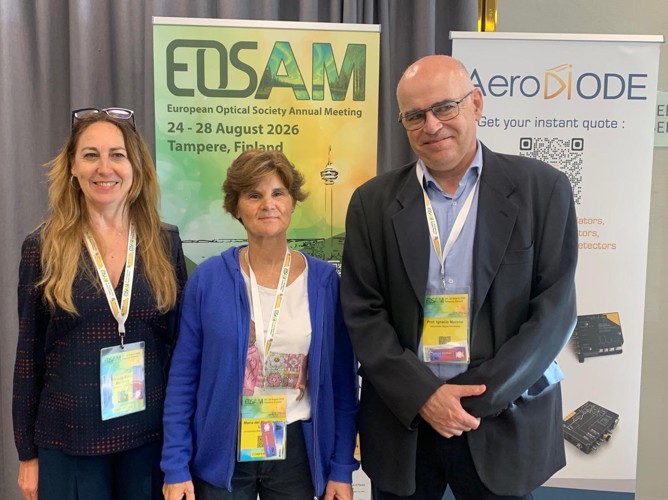 Pascuala García-Martínez, María del Mar Sámchez-López and Ignacop Moreno attended the conference EOSAM 2026 held on Tampere, Finlan, from 24-28 August 2026.
Pas delivered the oral presentation «Single-acquisition hyperspectral retardance data-cube measurement of a 10-bit LCOS spatial light modulator over the visible spectrum«, while María del Mar delivered the oral presentation «Performance of an achromatic Fourier transform system using geometric-phase lenses«, both of the at the Topical Meeting (TOM) of Applications of Optics and Photonics.
During the conference, Ignacio became President of the European Optical Society (EOS).
martes, 1 de septiembre de 2026
i.moreno
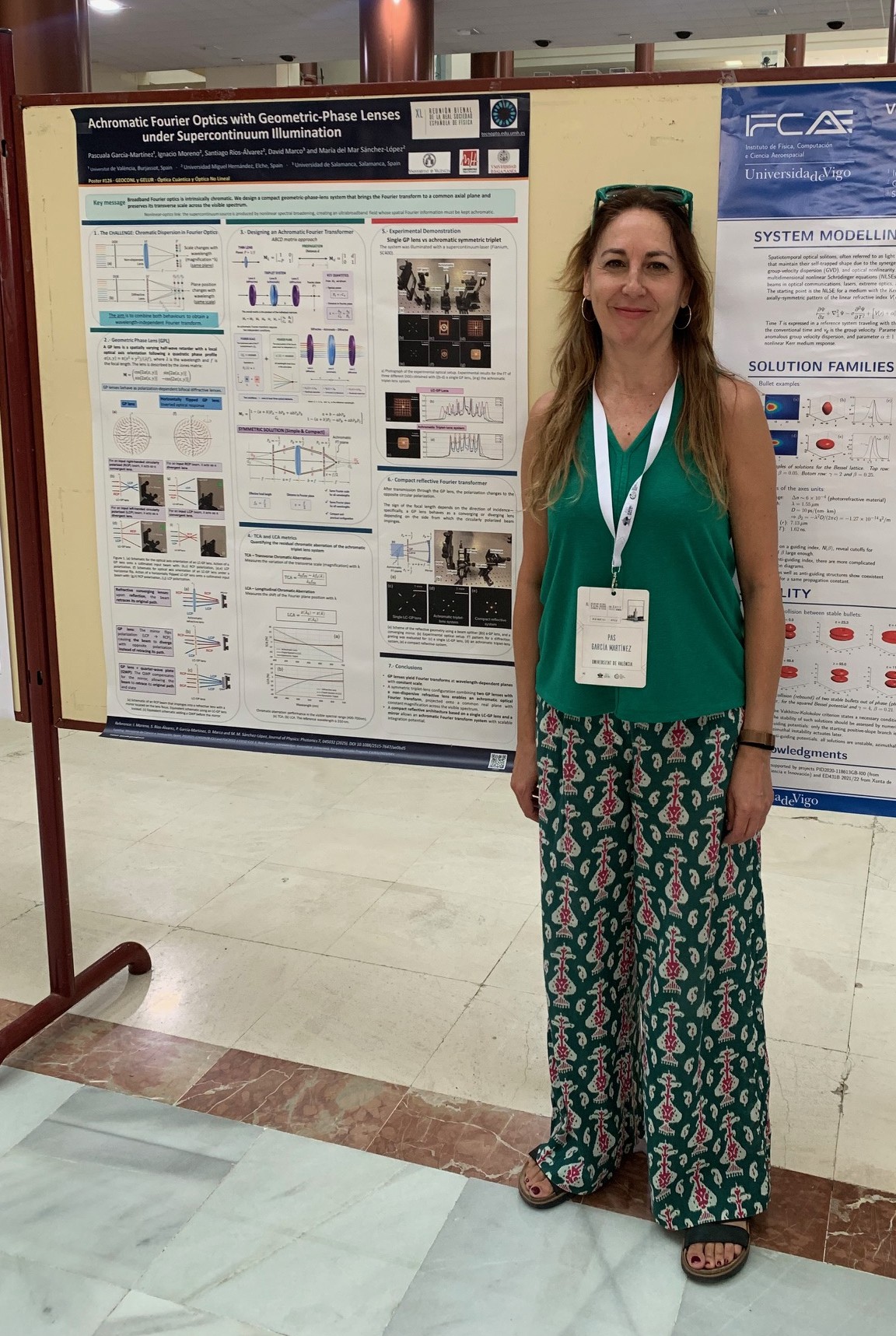 Pas García presented our work “Achromatic Fourier Optics with Geometric-Phase Lenses under Supercontinuum Illumination” at the 29th Bienal de Física, organized by the Real Sociedad Española de Física in Sevilla, 20-24 July 2026.
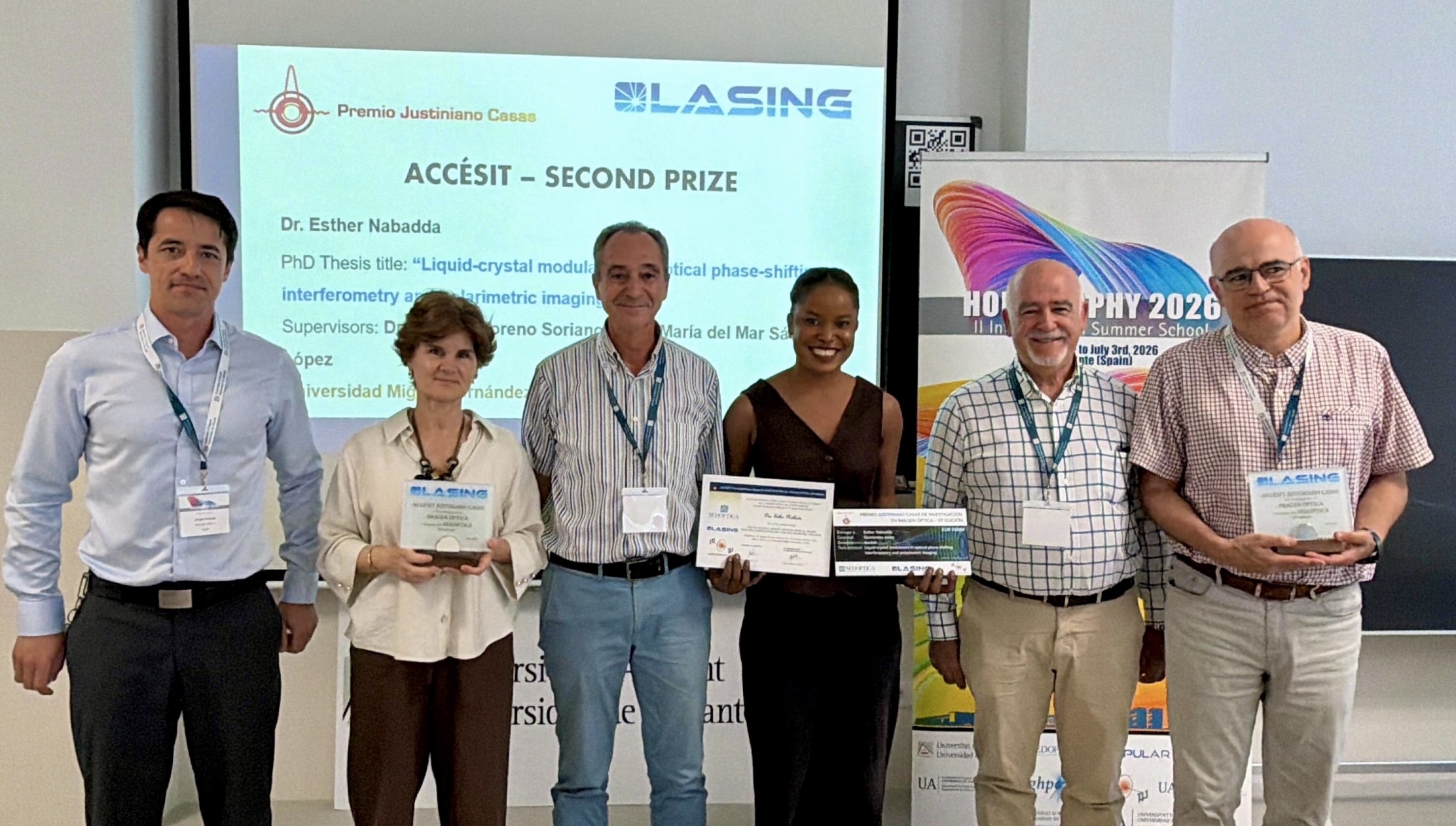 Esther Nabadda received the accessit (2nd prize) to the ‘Justiniano Casas’ Award to the best PhD Thesis in the field of optical imaging in Spain.
The Prize was delivered on July 2nd, at the II International Summer School on Holography, organized at the University of Alicante.
The ‘Justiniano Casas’ Award recognizes the best PhD Thesis in Spain in the field of optical imaging, and it is organized by the Imaging Techniques Committee of the Spanish Optical Society (SEDOPTICA), and sponsored by the company LASING.
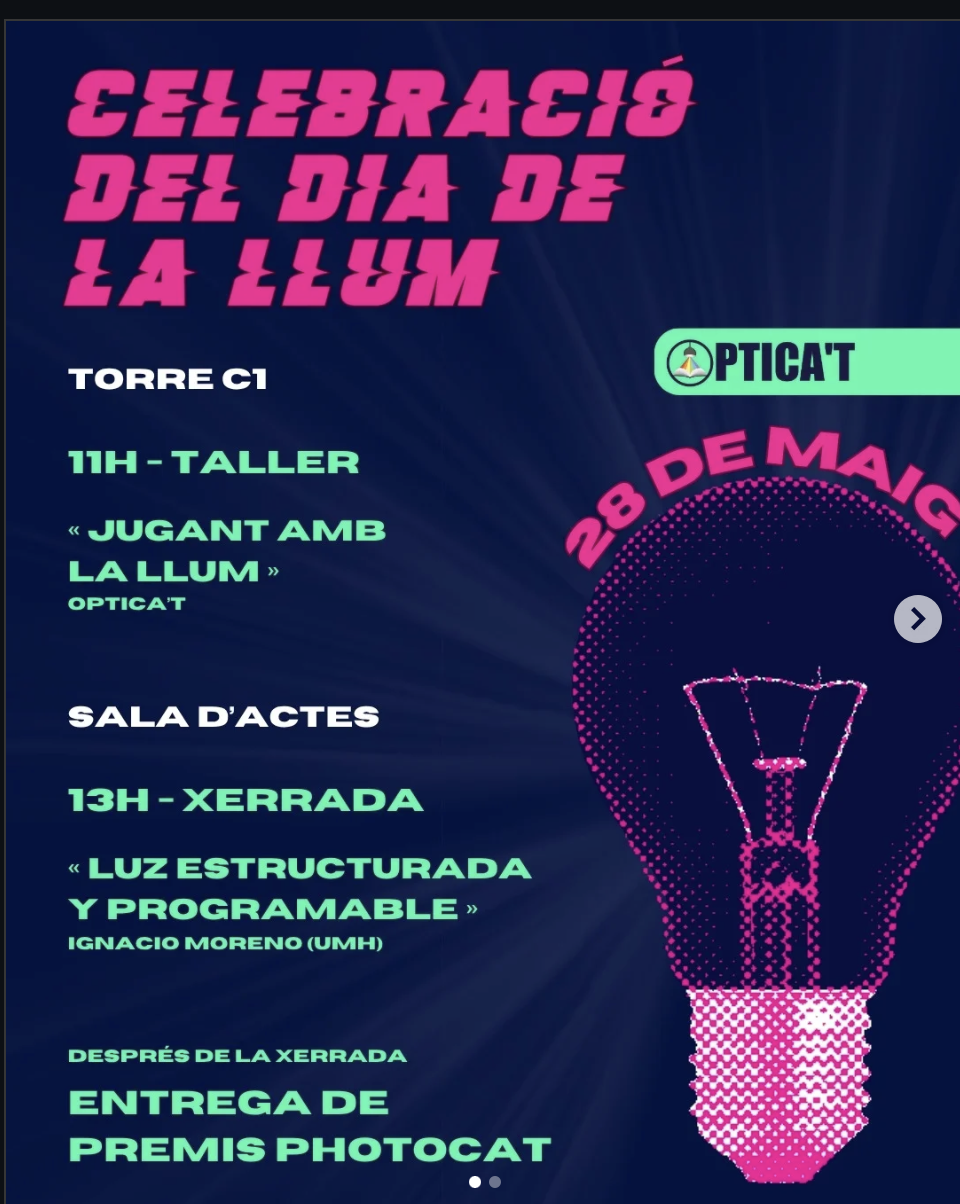 On May 28th, Ignacio Moreno delivered the talk Structured Programmable Light at the Faculty of Sciences, Universitat Autònoma de Barcelona (UAB).
This was part of a workshop organized by the UAB Department of Physics to celebrate the International Day of Light (IDL), which was leaded by OPTICAT UAB student chapter.
News at the Spanish IDL: link
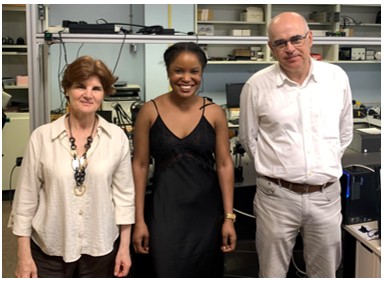 In April 2026 we received the visit of Dr. Esther Nabadda, our former PhD, now working at University Hospital Bonn.
Esther returned for two weeks to develop together computer-generated holograms designs with phase-only spatial light modulators, to be applied for augmented reality applications.
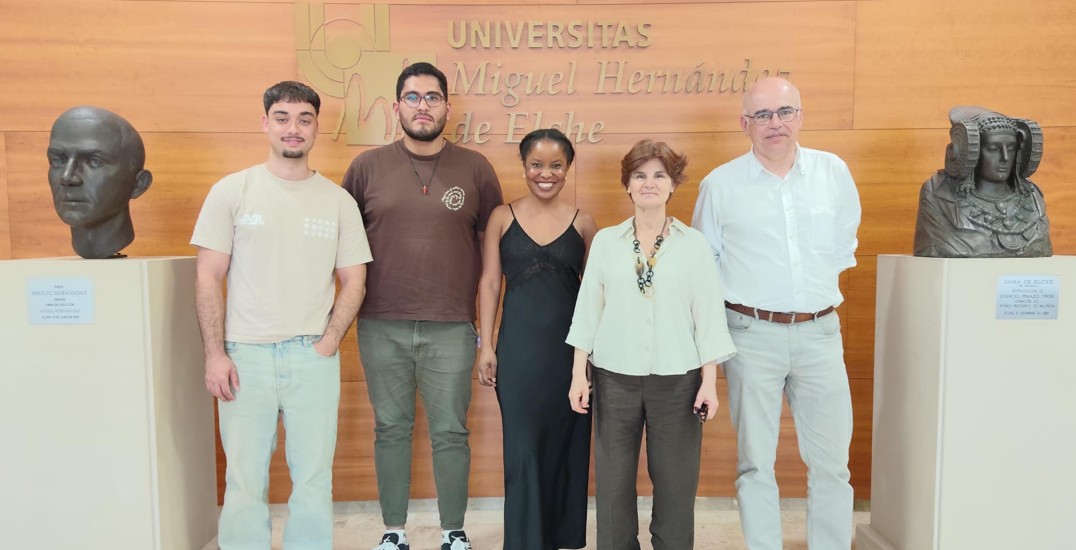 Sergio López Rincón joined TecnOpto Lab. He holds a Degree in Physics from University of Alicante and a Master in Novel Electronic and Photonic Technologies from University Complutense of Madrid. He also has experience as an optical engineer.
He will develop a PhD Thesis at TecnOpto Lab centered on liquid-crystal photonics for hyperspectral imaging.
The picture shows our team, PhD students Sergio López, Santiago Ríos, postdoc visitor Esther Nabadda, and María del Mar Sánchez and Ignacio Moreno.
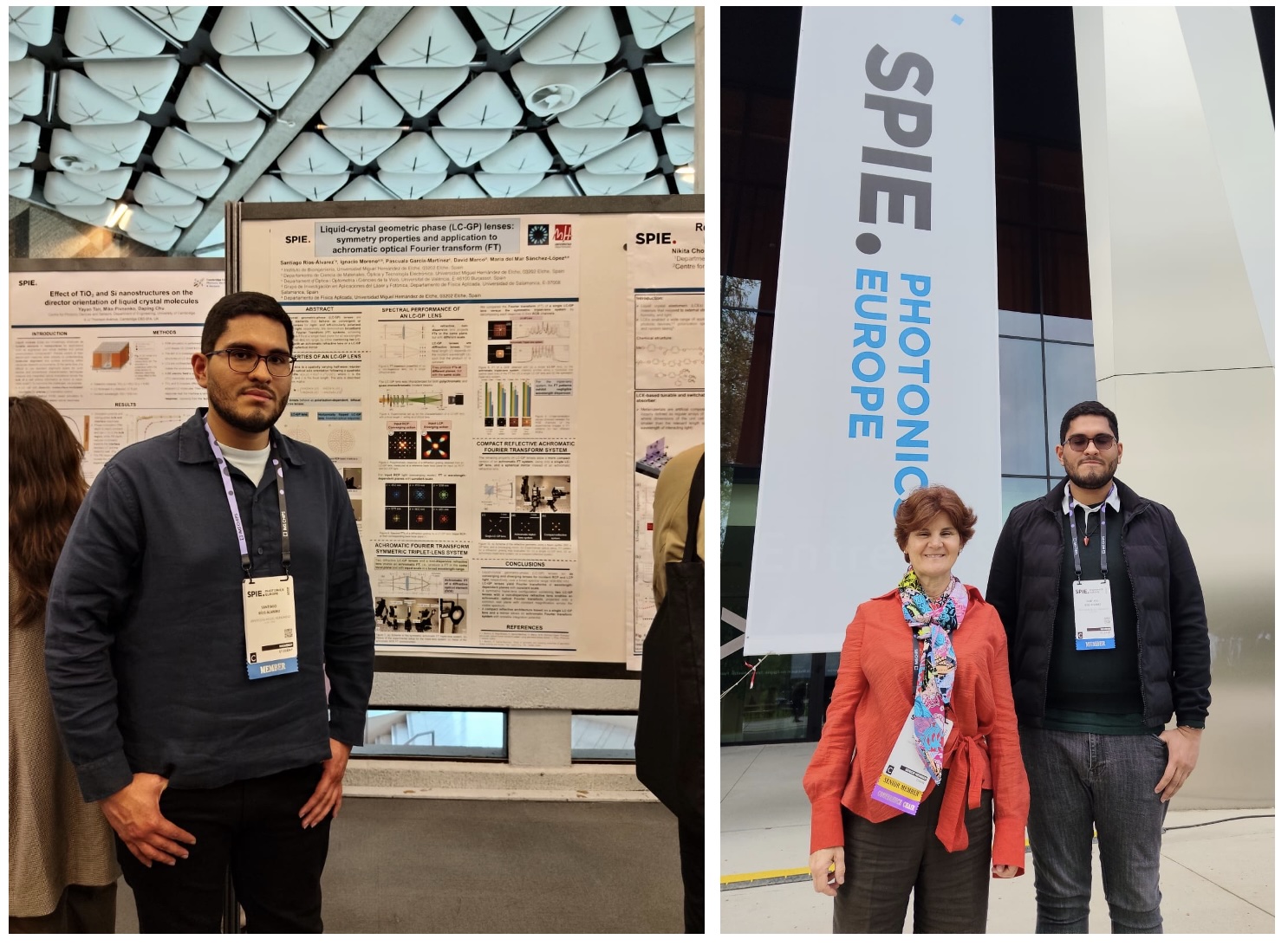 María del Mar Sánchez and Santiago Ríos attended the conference SPIE Photonics Europe 2026, held in Strasbourg (France), in April 12-16, 2026. They participated at the conference Liquid Crystal Optics and Photonic Devices II. María del Mar was co-Chair of the conference, together with Prof. Ibrahim Abdulhalim.
Additionally, María del Mar presented the talk entitled Cylindrically-polarized vector beams with tunable topological charge generated by an adaptive liquid-crystal device. You can access the related SPIE Proceedings here.
Santiago presented the poster entitled Liquid-crystal geometric-phase lenses: symmetry properties and application to achromatic optical Fourier transform, which was awarded second prize Best Student Poster, sponsored by AlphaMicron. You can access the SPIE Proceedings here.
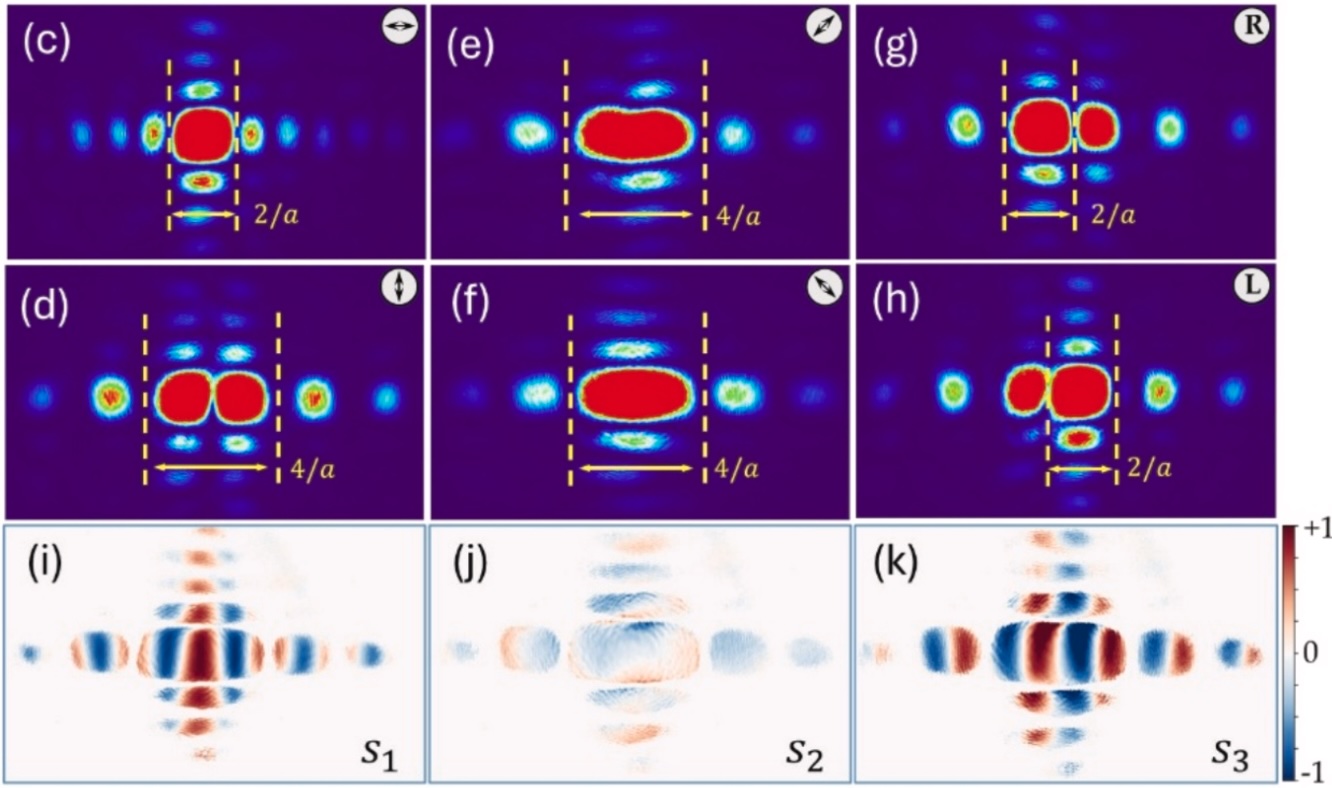 Our last work is now published in the journal Results in Physics entitled Polarization and coherence properties of the diffraction by a double retarder rectangular aperture. In this work we analyze the diffraction of a rectangular aperture with different retarders on each half. Under polarized illumination, it generates a structured polarization in the diffracted field. Using the combined Fourier transform Jones (FTJ) matrix and beam-coherence-polarization (BCP) matrix formalism, we also show that even when the aperture is illuminated with unpolarized light, and the field therefore remains unpolarized right after the aperture, the diffracted field yet exhibits a polarization and spatial coherence structure.
Experimental verification is conducted using a LCOS-SLM to encode the double retarder. The experimental system is completed with a second LCOS-SLM to implement a digital double-slit experiment. This enables to measure the scalar complex degree of coherence and shows that the double-retarder aperture can generate spatially-structured scalar coherence patterns under unpolarized illumination.
This work is part of the PhD Thesis of Santiago Ríos-Álvarez.